Is the existence of God incompatible with evil? What is the difference between 'classical theism' and 'theistic personalism'? What is the best argument against there being a God? From Aristotle through Aquinas to the present, philosopher Edward Feser gives an in-depth look at arguments for the existence of God.
In your book The Last Superstition, you have been a very vocal critic of the ‘New Atheism’ movement. In particular, you have regarded the writers as being intellectually shallow in their treatment of religious belief. Why do you think that is?
For one thing, the New Atheist writers tend not to know a whole lot about the ideas that they are criticising. They tend to attack ‘straw men’ and take their opponents on at their weakest points, rather than their strongest points. Any philosopher knows that when you’re dealing with critics or opponents, you always want to take them on at their strongest point. But New Atheist writers tend not to do that. Of course, atheists of the past have sometimes been prone to that as well, but part of what makes the New Atheist movement different from previous generations of atheists is that it’s become something of a mass-movement.
The tendency to attack straw men and attack caricatures and not do your basic homework before you attack religion has now become a more widespread phenomenon than it was in earlier generations. That’s part of what’s distinctive of New Atheists. I have found, in dealing with New Atheist writers, that they tend to focus almost obsessively really on a small set of arguments for religious belief.
Their favourite target is William Paley, for example, who is the most famous proponent of the design argument. I don’t, myself, think the design argument is a very strong argument. I don’t think it’s a very important argument, historically, for the existence of God. But I do think that it’s a better argument than the New Atheists give it credit for. But nevertheless, it’s simply not a very important argument for God’s existence and it’s certainly not as challenging or as powerful as the kind of arguments that are defended in the books that we’re going to discuss. In particular, it’s not as powerful or as central as the arguments in Thomas Aquinas or in Leibniz or in ancient thinkers like Aristotle and Plotinus.
But the New Atheists tend to focus on it obsessively and almost exclusively as if it was the only significant argument for God’s existence. Part of the reason for that is that at least some of the New Atheist writers – like Richard Dawkins and Jerry Coyne – are coming at this from the point of view of biology. And since the way that Paley presents the design argument is to emphasise the complexity of biological organisms, he seems to be in the ballpark of a writer like Dawkins or Coyne. So, they tend to focus on that because it’s more in line with what they know about and feel they have something to say about. But this doesn’t mean that objectively it’s as important an argument as they tend to pretend. That’s part of what makes the New Atheism shallow. It focuses on arguments that, historically speaking anyway, are far from being the central arguments for God’s existence.
With contemporary philosophy of religion and analytic theology, there is often a great level of rigour and conceptual sophistication. But it seems to be the type of literature that these writers aren’t engaging with at all.
You’re right, they’re not engaging with that material at all. They seem to be committed a priori to the belief that no religious believer could possibly have anything interesting to say about the existence of God or the nature of God. When you try to engage them in a serious discussion and ask them to look at what these analytic theologians have to say, or what a prominent thinker of the past like an Aquinas or his contemporaries have said, their typical response is to say that we don’t need to waste our time with engaging with such writers because we already know that their conclusions are wrong and we already know that the arguments for those conclusions can be nothing more than rationalisations of prejudice.
“Any philosopher knows that when you’re dealing with critics or opponents, you always want to take them on at their strongest point. But New Atheist writers tend not to do that”
The irony there, of course, is that in taking that sort of attitude, they’re really manifesting a sort of prejudice – in the sense of pre-judging something – and a kind of bigotry, in the sense of closing their minds to the possibility that the other side might have something of interest to say. It’s the very kind of prejudice and bigotry that they accuse religious people of. It’s quite ironic. And the cognitive dissonance there and the inconsistency is so obvious and so manifest that it’s quite amazing they don’t see it. But a lot of these guys happen not to see it. It’s even more true of the myriad followers they’ve gained.
In philosophy generally, decisive ‘knock-down’ arguments against any claim are rare. You can challenge the reasoning of an argument and say that a conclusion doesn’t follow, but the idea of definitively settling once and for all a question like whether objective morality exists seems almost unthinkable. But there seems to be a real bias against the idea that we can even discuss the possibility of God as being on the table at all.
Yes, there is a kind of double-standard here. It’s a double-standard that you find not only among New Atheist writers but even, unfortunately, among some academic philosophers. In virtually every other area of philosophy, even the most notoriously bizarre arguments and ideas are taken seriously, such as: How do I know that the table in front of me is real and not just a dream? True, there are almost no philosophers who would take seriously as a live option the idea that the world of our experience is a complete dream or hallucination. But, certainly, every philosopher would say that whether or not we think for a moment that the conclusion is plausible, we need to take seriously the arguments for that conclusion and examine them, see what might be wrong with them, and also consider how a radical sceptic may defend himself against our criticisms.
Philosophical ideas are generally treated as if they are always still on the table. They are always worthy of our consideration and discussion and maybe there’s some aspect or hidden wisdom behind the argument that we haven’t yet noticed. So, it’s always important to keep them in the philosophical discussion. And yet, arguments for God’s existence are often not given that same consideration. People don’t pay them that same compliment of treating them as if they’re worthy of ongoing consideration. The idea is that as long as some thinker in the past, like David Hume or Immanuel Kant, has raised some objection to them, then the arguments simply fail and they are not worth considering as anything more than museum pieces.
Before we turn to your book choices, what do we mean by ‘God’ here? Are we talking about the tenets of what might be called ‘classical theism’ or are we talking about the God of a particular religious tradition?
Brian Davies, who is the author of a couple of the books that we’re going to be discussing, draws a very useful distinction. He’s not the only person to have drawn it but he’s perhaps the most prominent in contemporary philosophy of religion. This is a distinction between ‘classical theism’ on the one hand and ‘theistic personalism’ on the other hand. Theistic personalism also sometimes goes by the name of ‘neo-theism’, to contrast it with classical theism. This is a very important distinction to keep in mind when we evaluate arguments for God’s existence.
The distinction is basically this: the theistic personalist or neo-theist basically starts out by thinking of God as a kind of person, like us but without our limitations. Classical theism takes a very different approach. I don’t mean to say that classical theism doesn’t think of God as personal. That’s not the point. The point, rather, is that the theistic personalist begins with the idea of God being a person in the sense of being a member of a general kind or category, namely the ‘person’ category, right alongside us.
God is a person in just the way that we are, or in just the way that an extraterrestrial might be, with the exception that God doesn’t have the limitations on his power and knowledge or goodness and so on that we have. That’s the starting point of neo-theism or theistic personalism, as Davies understands it. Writers in this tradition would be philosophers like Alvin Plantinga and Richard Swinburne. I would put William Paley in this category as well. This is their starting point or way of thinking about God and everything that they say about the nature or existence of God reflects that starting point. And the end result is that they typically end up with a fairly anthropomorphic conception of God.
Classical theism, as you might guess from the label, is the tradition that is represented by ancient thinkers like Aristotle and Plotinus, by medieval thinkers like Moses Maimonides and Thomas Aquinas, and by modern thinkers like Leibniz. Classical theism has a very different starting point. It may end up attributing to God personal attributes like intellect and love and free will and so forth, but its starting point is very different. For classical theism, whatever else we want to say about God, the core idea is that God is the ultimate explanation of why anything exists at all. And of why anything exists at all here and now – of how the world is sustained in existence at any particular moment – and not just an explanation of what caused the Big Bang or what have you.
There are all kinds of other things that we can say about God, but the starting point is the idea that God is where the buck stops metaphysically. When classical theists spell out an argument for God’s existence, or spell out the nature of God and try to give an account of what God is, they always begin with this idea of God being the ultimate source of reality, of why there is anything in existence at all rather than nothing.
“For classical theism, whatever else we want to say about God, the core idea is that God is the ultimate explanation of why anything exists at all. ”
For a classical writer like Aristotle or Aquinas or Maimonides, that’s how we have to begin. Anything else we say about God and his nature has to be guided by that fundamental consideration: what does God have to be like in order to be the ultimate explanation of why anything exists at all? The end result is that they end up with a much less anthropomorphic conception of God. Even when they attribute things like intellect and will to God, these terms are understood to have an importantly different sense than they have when applied to human beings.
Three out of your five books are explicitly concerned with the work of medieval philosopher Thomas Aquinas. Can you give me an idea of who he was and of his status as a philosopher?
Thomas Aquinas is generally considered to be the greatest philosopher of the middle ages – he lived in the 13th century – and he’s also considered to be the greatest proponent of natural theology. ‘Natural theology’ is a term that I prefer to the more common label for the subject matter that we’re talking about, namely philosophy of religion. Natural theology is traditionally distinguished from ‘revealed theology’. The idea is that ‘theology’ means knowledge about God’s existence and nature, and a revealed theology would be knowledge of God’s existence and nature that we acquire through some kind of divine revelation – through a prophet that God has sent, or through a sacred book that he has inspired.
By contrast, natural theology is the idea of knowledge concerning God’s existence and nature that we arrive at simply by applying our natural powers of reason. We reason philosophically, say, from the existence and nature of the world to the existence and nature of a divine cause of the world. Crucially, the claims that are made are all based on philosophical argumentation rather than any appeal to divine revelation.
“Natural theology is the idea of knowledge concerning God’s existence and nature that we arrive at simply by applying our natural powers of reason…Crucially, the claims that are made are all based on philosophical argumentation rather than any appeal to divine revelation.”
Aquinas is a Christian theologian as well as a philosopher. Certainly, a lot of what he has to say about God is based on what he takes to be divinely revealed sources such as Scripture and the teaching of the church. But, all the same, a great deal of what he has to say is based instead on purely philosophical considerations. So I would say that Aquinas is generally considered to be the greatest of thinkers who approach the question of God’s existence and nature by way of natural theology.
One of the reasons that Aquinas is so important has, of course, to do with the power of his own ideas. By anyone’s accounting, he had a very powerful intellect. But another reason why Aquinas is so important has to do with the way he borrows from the past. That’s why he can be thought of as a representative thinker of the classical theist tradition. When you read what Aquinas has to say on the subject of natural theology, he is very deeply influenced by ancient thinkers like Aristotle – most famously – but also by the neo-Platonic tradition which is represented by writers like Plotinus. And then there were the medieval Jewish and Islamic thinkers like Maimonides and Avicenna who had themselves read and processed the ancients and provided a filter through which Aquinas himself came to read them.
So, when Aquinas writes on God, he has this very rich tradition to draw on. He is giving you a synthesis of what he takes to be the best insights of all of these previous writers. So, when you study Aquinas and learn what he had to say on this subject, you are at least indirectly coming to understand something of what these earlier writers had to say. In this way, Aquinas is not a sui generis thinker.
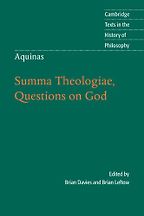
We should probably start with the man himself. Your first book is Summa Theologiae, Questions on God edited by Brian Davies and Brian Leftow. Why have you chosen this?
The volume is essentially the first quarter or so of Part One of Summa Theologiae, where Aquinas addressed the topic of the existence and nature of God. This is the part of the book where Aquinas is approaching the question from the point of view of natural theology, as opposed to revealed theology. Later on in the Summa, of course, he brings in considerations from revealed theology, when discussing certain aspects of God’s nature such as the doctrine of Trinity. But, in the material that’s collected in this particular volume, he’s approaching the subject entirely from the perspective of philosophy. So, even someone who doesn’t share Aquinas’ commitment to Christianity would find much of value in this book and non-Christian theists would find nothing there that they would necessarily disagree with.
Is he making a cumulative case of arguing first for God’s existence and then going on to talk about the nature of God?
It’s in this material that he presents his famous ‘Five Ways’ of arguing for God’s existence. That comes very early in the discussion and is part of how he gets the ball rolling in the discussion of God. I should say a little bit about the Five Ways because they’re very commonly misunderstood. First of all, the Five Ways are not original with Aquinas and he certainly would not claim that they are original to him. They are essentially five lines of argument that were in the air, as it were, at the time that he wrote. They were fairly well-known lines of argument, standard moves you might say, when presenting a case for God’s existence. That’s the first thing to notice: they are not original and are not presented as original by Aquinas.
The other thing to notice, which is an extremely important point that is often overlooked, is that Aquinas did not intend for them to be standalone pieces of reasoning that would convince even the hardnosed sceptic on a first reading. The Five Ways are typically read these days out of context. They are often the only thing that a modern reader ever reads from Aquinas. A modern reader might encounter them in an anthology, and they only take up maybe two pages. So, they are ripped from context and read as though Aquinas intended them to be a one stop shopping source for learning about the existence and nature of God. Naturally, a modern reader reads them and thinks of all kinds of objections that someone might raise against them. The modern reader will then conclude that Aquinas is overrated, that he didn’t think of these obvious objections, and that he must have been really naïve if he thought anyone would find these arguments compelling.
“The Five Ways are not original with Aquinas and he certainly would not claim that they are original to him. They are essentially five lines of argument that were in the air, as it were, at the time that he wrote”
But that’s quite unfair because they weren’t intended to do that job. They were intended to do a very different job. In the context of Part One of the Summa Theologiae, they are merely intended to summarise in a brief way, you might say in an almost Wikipedia entry style, these five lines of argument that would have been familiar to readers of his day. As I tell my students, when you’re reading the Five Ways, think of them as the sort of thing you might read in an encyclopaedia article when what you’re looking for is just an overview of the basic idea. You are not looking for a defense that will convince the most hardnosed sceptic. The most hardnosed sceptic about evolution or quantum mechanics is not going to find an answer to all his objections by reading an encyclopaedia article on one of those subjects. That’s not what an encyclopaedia article is supposed to do.
And so, an atheist is not going to find the answers to every objection that he might raise in this little two-page selection from the Summa. That was not what Aquinas was trying to do. He was trying to summarise lines of argument that he develops in much greater detail elsewhere and that other writers developed elsewhere because, again, these are not the private property of Aquinas. They were common lines of argument that the readers of his day would have been familiar with.
If these arguments are not original to him, does Aquinas himself offer innovations to them? Does he develop them in a way that no one else has before?
There are aspects of some of the arguments that he gives for God’s existence that reflect his distinctive philosophical point of view. One of those is an argument that we will be talking about later when we discuss another one of my book choices. But in the Five Ways, especially, what is most striking about the arguments is what Aquinas has in common with previous thinkers in the tradition rather than how he differs from them.
Can you a give a representative argument from the Five Ways?
The first of the Five Ways is also known as the ‘argument from motion’. It begins with the Aristotelian analysis of how change works. Aquinas notes in the argument that we see in the world around us that changes of various types occur. It could be what Aquinas would call local motion, where an object moves from one point in space to another. It could be qualitative change like when an object changes colour such a banana going from green to yellow. Or it could be quantitative change as when a puddle changes size. What Aristotle famously argues is that what change of any of these kinds involves is the actualisation of a potential. It involves something going from being potentially a certain way to being actually that way. In the case of the banana, it goes from being potentially yellow to being actually yellow. That is how change is possible, contrary to pre-Socratic philosophers like Parmenides and Zeno who famously denied that change is possible. How then does change actually occur? The way that the First Way proceeds is to say that the only way any potential ever becomes actual is if there’s something already actual that makes that happen: something actual that actualises the potential. The coffee in the cup next to me starts out hot, it’s potentially cold, and that potential is actualised; it becomes actually cold when the cold air in the room surrounding it cools down the liquid in the cup.
As that example illustrates, we have a kind of regress of causes or changers. One thing is being actualised by another which is actualised by another and so on and so forth. What Aquinas is concerned with in this argument, just as Aristotle was, is a series of changers or movers that extends not backwards into the past but rather, you might say, ‘downwards’ here and now. Ultimately Aquinas thinks that for any change to occur here and now, there must be something here and now that is making that happen. If what’s making it happen is something that is itself changing, then there must be some other factor here and now that is causing that. The only way this can stop is if there is something here and now which can change everything else – which can actualise all those potentials – without itself being actualised. This is something that can move without being moved and change other things without being changed. And this is what Aristotle and Aquinas call the ‘unmoved mover’ of the world, or as I prefer to put it: the ‘unactualised actualiser’ of the world. This is a cause that actualises other things without itself being actualised because it’s already purely or fully actual. That’s the philosophical core of Aquinas’ conception of God. Everything else he says about God and God’s nature, when he’s doing natujral theology, is essentially grounded in an analysis of what something has to be like in order to be an unactualised actualiser. He cranks all the various divine attributes out of that basic concept.
Can you suggest how, from an analysis of the idea of an unactualised actualiser, you can get in the direction of the other classical divine attributes?
The basic way in which it works is this. Once Aquinas gets to a first cause – an uncaused cause – which is what he calls ‘pure actuality’, then we start asking about particular aspects of God’s nature such as the question of whether God can change. As I’ve already indicated, if change involves the actualisation of potential and God is purely actual and has no potential, then naturally he’s not capable of changing. If he’s not capable of changing, though, and we think of time as essentially the measure of change – which is the way Aristotle and Aquinas think about it – then God cannot be in time either. Anything in time is going to go from potential to actual and if God is purely actual then he must, therefore, be outside of time. He must be non-temporal or eternal.
On Aquinas’ analysis, and here again he’s building on Aristotle, material things always of their nature exhibit potentiality. That’s really Aristotle’s and Aquinas’ core idea of matter. Matter is essentially the potential to take on form. So if God is entirely actual – if God is pure actuality with no potentiality – then there must be nothing material in God either. Matter always involves the potentiality to change. Just think of ordinary experience. Something material might be broken up into its constituent parts and undergo change in that way. Something that’s unchangeable, though, because it’s pure actuality with no potentiality, must accordingly be immaterial as well as atemporal as well as unchangeable.
“If he’s not capable of changing, though, and we think of time as essentially the measure of change – which is the way Aristotle and Aquinas think about it – then God cannot be in time either.”
And then we come to other attributes like omnipotence. For Aquinas, what it is to be powerful is essentially to be able to actualise potential. It’s the ability to change or alter other things, to produce effects. On Aquinas’ analysis, anything that’s changing is going to be traced to the activity of the unmoved mover or the ‘unactualised actualiser’. So there is no power that’s exercised in the world, and there’s nothing happening in the world, that’s not ultimately derived from what the unactualised actualiser is doing. In that case, all possible or actual exercises of power are ultimately traceable to the unmoved mover. He is the source of all power. And, thus, he’s all-powerful.
Then there’s also the question of monotheism. What Aquinas is going to argue is that the only way you can make sense of there being more than one member of some category of things is if there is some potential that one member of the category exhibits that the other member does not. But if we’re dealing with something that is purely actual and in no way potential, then there’s not going to be – even in theory – a way to distinguish one member of that class from another. There’s not going to be any potential that one of them has that the other one does not have. For example, the way we distinguish two human beings or two dogs or two chairs has in part to do with the fact that they are associated with different bits of matter. There’s a bit of matter that makes up my body and there’s a bit of matter that makes up another person’s body. But, as I said earlier, matter is for Aquinas associated with potentiality.
Since an unmoved mover has no potentiality and is purely actual – and is therefore immaterial – then you’re not going to be able to distinguish one prime mover from another by associating them with different material bodies. It’s going to turn out that any other way in which you might try to distinguish one unmoved mover from another is similarly going to bring in the idea of potentiality. Potentiality is excluded from the very nature of an unmoved mover and so too is the possibility of there being, even in principle, more than one unmoved mover. So, we have the idea of divine unity or monotheism.
A crude form of this argument which is endlessly reprinted in textbooks goes like this: (i) everything that exists has a cause; (ii) the universe exists; (iii) thus the universe has a cause. This naturally invites the objection ‘well, what caused God?’. Can you explain why this form of the argument, and this objection, are so misguided?
This is a very common objection. You could even say that it’s the core objection that atheists tend to have to the very possibility of a first cause argument for God’s existence. If everything has a cause, then what caused God? If you say that God doesn’t have a cause, then why can’t we just say that the universe doesn’t have a cause either? In which case, the first cause argument for God fails. That’s the objection. But it’s a very bad objection.
One of the interesting things about it is that you find that people who raise this objection – and it’s not just pop atheist writers like the New Atheists but also professional academic philosophers as well – they never cite any actual philosopher who gives the argument that they are objecting to. They are never able to cite a philosopher who actually gives the argument ‘everything has a cause, so the universe has a cause’. Certainly, they won’t find it in Aristotle or in Aquinas. It’s a sort of urban legend that is constantly attacked even though it’s not an argument that any prominent philosopher has ever given.
Not only does Aquinas not give that argument, he would actually reject the premise that everything has a cause. What Aquinas is committed to is not the thesis that everything has a cause. Instead, his arguments proceed from premises like ‘whatever undergoes change requires a cause’ or to be more precise: ‘whatever goes from potential to actual requires a cause’. Or it might be formulated in a different way by saying ‘whatever is contingent requires a cause’, meaning whatever exists but could in theory have failed to exist requires a cause. But that’s as different from saying that everything requires a cause, as saying that ‘triangles have three sides’ is different from saying ‘all geometrical figures have three sides’. It’s a very different claim.
“They are never able to cite a philosopher who actually gives the argument ‘everything has a cause, so the universe has a cause’. They won’t find it in Aristotle or in Aquinas. It’s a sort of urban legend that is constantly attacked even though it’s not an argument that any prominent philosopher has ever given.”
For Aquinas, what makes it the case that something needs a cause in the first place is precisely that it has potential that needs to be actualised. So, there has got to be something already actual that makes that happen. But if there’s something that has no potential to be actualised, then not only does it not need a cause – because there’s nothing potential there to be actualised – but it could not even in theory have had a cause in the first place. Of course, someone might try to take issue with the reasoning that leads Aquinas to the conclusion that there is such a thing as an unmoved mover or purely actual actualiser of the world. But to raise the objection ‘if everything has a cause, then what caused God?’ simply misses Aquinas’ point entirely. It’s based on the assumption that Aquinas is committed to the premise that everything has a cause, which he is not. And it completely ignores the very reason why Aquinas characterises God as uncaused. He’s not making an arbitrary exception to a general rule. Rather, the whole point is that what makes something in need of a cause in the first place is that it has potential in need of being actualised. This precondition of something’s needing a cause does not apply to God.
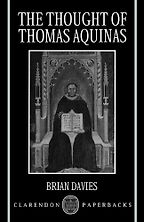
Let’s look at your second choice. This is The Thought of Thomas Aquinas by Brian Davies. Out of the voluminous studies on Aquinas, why have you chosen this one?
I was an atheist for about ten years, and I only became a theist in the early 2000s. The reason I moved from atheism to theism was in large part because of my study of Thomas Aquinas. I got into the study of Aquinas by way of preparing for lectures that I was giving in philosophy classes. I wanted my students to understand why anybody would have found arguments like Aquinas’ convincing in the first place, even though I myself at the time did not. So, I got back into the secondary literature in the course of preparing my lectures. I came to see Brian Davies’ book on Thomas Aquinas as one of the best examples of this literature. It’s one of the most lucid and thorough yet succinct summaries of Aquinas’ thought.
Davies explains Aquinas in a way that is not only clear but is also written from the approach of someone whose training was in analytic philosophy. Davies is really someone to read for any analytic philosopher who wants to understand Aquinas. I have found this book really useful from that point of view. He explains very lucidly what Aquinas has to say about issues like the ones we were talking about earlier from the first part of the Summa Theologiae, but he also provides a general overview of what Aquinas has to say about other subjects as well. For example, about distinctively Christian doctrines such as the Trinity and the Incarnation and what Aquinas has to say about issues of philosophical anthropology, free will, ethics, and what contemporary philosophers would call philosophy of mind. In general it provides the best overview of Aquinas’ thought that is available these days and, as I say, one that is especially useful to someone whose training is in analytic philosophy.
You mentioned that Davies is looking at Aquinas’ philosophical analysis of doctrines like the Trinity and the Incarnation. Obviously, Aquinas is building on this ground of classical theism but presumably you cannot reason your way to the Christian doctrine of the Trinity from scratch. How does Aquinas integrate revelation within his framework of natural theology?
The way that Aquinas divides up the territory is that he thinks there are some things that we can know about God through purely natural reason. From a modern reader’s point of view, it might be surprising just how much Aquinas thinks we can know in that way. We can know not only that there is a God — in Aquinas’ view this can be strictly demonstrated through philosophical arguments — but we can deduce a great number of the divine attributes: that God is all-powerful, omniscient, outside of time and space, and so on.
There are other things about God’s nature, however, that in Aquinas’ view cannot be known through philosophical reasoning alone. They could not be known simply through applying our natural powers. If we’re going to know them, then, we need to rely on special divine revelation. God has to reveal them to us through some prophet or sacred text or the church, for example. The doctrine of the Trinity and the doctrine of the Incarnation would be two examples of this. Now, does that mean that Aquinas thinks that these are not ideas that are susceptible of rational investigation? No.
True, he thinks that we can only know about them through divine revelation, but, there are two things that have to be emphasised here. First of all, Aquinas would not deny for a moment that when we ask ‘How do we know that these doctrines have really been divinely revealed?’, we have to be able to give a rational answer to that. He doesn’t think that the fact that divine revelation has occurred is itself something that we have to appeal merely to faith in order to know about. He thinks that you need to be able to give rational arguments for the conclusion that an act of divine revelation has actually occurred. So even what he has to say about distinctively Christian doctrines doesn’t float in mid-air without any rational foundation. He does think that we can know these things only if God reveals them, but he also thinks that we ought to be able to give some rational argument for the conclusion that these doctrines really have been divinely revealed. And he thinks that there are such arguments.
“Aquinas doesn’t think that the fact that divine revelation has occurred is itself something that we have to appeal merely to faith in order to know about. He thinks that you need to be able to give rational arguments for the conclusion that an act of divine revelation has actually occurred.”
And once we have these doctrines through divine revelation, we can go on to investigate them rationally. We can give a philosophical analysis of the doctrine of the Trinity and ask about the content of the doctrine. What exactly is it saying? Does the doctrine contain any self-contradiction that would make it objectionable from the point of view of reason? Aquinas thinks that we can show that there in fact is no contradiction. Even if he also thinks that human reason can never entirely penetrate it, human reason can show that any attempt to show the doctrine to be somehow incoherent or self-contradictory doesn’t succeed. Even though reason couldn’t discover doctrines like the Trinity on its own, it nevertheless can know that they are divinely revealed and it can rationally investigate them once they have been revealed.
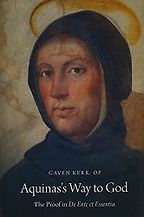
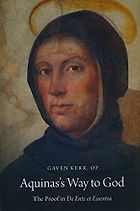
Your next choice is Aquinas’s Way to God: The Proof in De Ente et Essentia by Gaven Kerr. Tell me about this book.
The argument for God’s existence that Gaven Kerr discusses and defends in this book is a very interesting argument in a couple of respects. First of all, this is an argument which doesn’t in an obvious way appear in Aquinas’ list of the Five Ways in the Summa Theologiae. Its status relative to the rest of what Aquinas has to say on the subject of natural theology is a matter of some debate among Thomists, that is to say among followers of Thomas Aquinas. Some would argue – and I have argued this in my book on Aquinas – that the argument of De Ente et Essentia is at least implicit in one of Aquinas’ Five Ways. Other interpreters would argue that it’s entirely different from any argument that he gives in the Five Ways. But many twentieth century Thomists took the view that the argument of the De Ente is actually the core Thomistic argument for God’s existence; this one more than any other argument reflects Aquinas’ understanding of how we reason from the world to God. It gets more closely than any other argument does to the core of God’s nature, for Aquinas. That’s the view that some have taken, in any case.
So, what is the argument? The argument is essentially this. In this little book ‘On Being and Essence,’ which Aquinas wrote very early in his career, Aquinas made a distinction between the essence of a thing and its existence. The essence of a thing, you might say, is what a thing is. The existence of a thing is the fact that it is. Suppose that you were explaining the natures of certain creatures to someone – a child, say – who had never heard of them before. So, you explain what a lion is. You give a complete description of the ‘essence’ of a lion – of what it is to be a lion. Then you give a complete description of the essence or nature of a Tyrannosaurus Rex. And then, finally, you give a complete description of the nature or the essence of a unicorn. Then you ask, of these three creatures that I described for you, one of them still exists, one of them used to exist but has gone extinct, and the third never was real in the first place. Based on the description I gave you of the essences of each of these creatures, tell me which is which. And, as Aquinas would note, the child would be unable to do so. Knowing the essence of a lion, a Tyrannosaurus Rex, and a unicorn would not be able to tell you which, if any, of those creatures exist. The existence of a lion is distinct, therefore, from its essence or nature. These are two different principles or aspects of a thing.
The argument begins with this distinction between the essence and existence of a thing. This is a distinction that does a lot of work in Aquinas’ work elsewhere, but the way that it plays a role in Aquinas’ argument for God’s existence is as follows. Aquinas thinks that anything in which there’s a distinction between its essence and existence requires a cause for its existence. With a lion, for example, there’s nothing in the essence or nature of a lion that entails its existence. Its existence has to come from something outside of it. It has to be added to it, you might say. It’s not built in. And that is true not only when the lion first comes into being but at every moment at which it exists. Its existence has to be added to it from outside, precisely because it’s distinct from its essence or nature. For a lion to exist here and now, even for an instant, there must be something adding existence to its very essence here and now. There must be something imparting existence to it here and now.
But if that thing which is imparting existence to it is in the same metaphysical boat, as it were, if it is itself something whose essence and existence are distinct – so that it too needs existence to be added to its essence or nature — then that thing too will require some cause for its existence here and now. So, we have a regress. The only way we can break this regress, in Aquinas’ view, is if we get to a cause which imparts existence to other things without getting it itself from something else. This is something that has its existence built into it, you might say. This would be something whose very essence just is existence. There’s no difference in it between its essence and nature, on the one hand, and its existence on the other. Rather, its entire essence or nature just is existence. To use fancy jargon, it is what Aquinas calls ‘subsistent being itself’. This, Aquinas says, as he does in the Five Ways, is what we call God. He would then proceed to argue that anything that’s like this – anything that just is subsistent being itself – would have to have the various divine attributes.
You’re mentioned the need for a cause of something ‘here and now’, but we’re also talking about something outside of time. How does Aquinas understand causation, where something outside of time can cause a temporal effect?
Here is one of several areas where Aquinas’ account of theological language becomes very important. Aquinas is committed to something which is often called ‘the doctrine of analogy’ by commentators. The idea here is that there are three basic ways in which we use language. We might use language in a univocal way, where we use two different terms in exactly the same sense. If I talk about a baseball player swinging a baseball bat and a cricket player swinging a cricket bat, we’re using the word ‘bat’ in the same sense. There are differences between baseball bats and cricket bats, but they’re essentially the same kind of thing. A second way in which we might use language is equivocally. If I talk about a baseball bat and then talk about a bat that was flying in the attic and inspired Bruce Wayne to become Batman, here I’m using the word ‘bat’ equivocally. In one case I’m using the word ‘bat’ to refer to a stick that’s used in a certain sport, in the other case I’m using the word ‘bat’ to refer to a certain flying animal.
But Aquinas holds that there’s a third way in which we can use language, which he called the ‘analogical’ use of language. The analogical use of language is a middle ground between the univocal use and the equivocal use. And it’s not a metaphorical use. To be more precise, metaphor is one kind of analogical use of language but it’s not the only kind. There are analogical uses of language that are literal rather than metaphorical but are still not univocal or equivocal. One example of this would be the term ‘good’.
“When we say that God has power or we say that God has goodness, we are not saying that he has exactly what we have but just more of it. But we’re not saying either that what he has is completely unrelated to what we call power or goodness in us.”
Think of the way that we might describe a meal as good. You might say that the pizza I had for dinner was a good pizza. Or you might describe the book you are reading as a good book. Or you might describe someone as a good man. Aquinas would say that when we use the term ‘good’ in these three contexts, we’re not using the term in a univocal way. The goodness of food is very different from the goodness of a man. I guess a cannibal might use the terms in the same way, but unless we’re talking about a human being as a kind of meal then we’re not using the word in the same way. The moral goodness of a human being and the nutritional goodness of food or the literary goodness of a book are not exactly the same thing. But we’re not using the word equivocally either. It would be wrong to say that the goodness of a human being or the goodness of a book are entirely unrelated to the goodness of food, in the way that being a baseball bat and being a bat that flies around your attic are completely unrelated. We are using the word in an ‘analogical’ way, for Aquinas. We are saying that there is something in the goodness of a book that is analogous to the goodness of food. And there is something in the goodness of the food that is analogous to the goodness of a human being. It’s not the same thing, but it’s not completely unrelated either.
Get the weekly Five Books newsletter
For Aquinas, everything we say about God has to be understood in this analogical way. When we say that God has power or we say that God has goodness, we are not saying that he has exactly what we have but just more of it. But we’re not saying either that what he has is completely unrelated to what we call power or goodness in us. What we’re saying, rather, is that there’s something in God that is analogous to what we call power or goodness in us and so forth. So, to come back to this question of God being a cause, the way in which God is a cause of things is not exactly like the way that one thing in the world of our experience might cause another thing.
The way things in the world cause each other, for example, is sometimes by way of physical contact, as when one billiard ball hits another. But that can’t be the way that God causes things in the world or causes something to exist here and now, for example, because God is not a physical object and so doesn’t have a physical surface that can make contact with some other physical surface. And in every other way too, God is unlike a physical cause. So, when we describe God as a cause, this would be a classic case for Aquinas of when we’re using a term analogically rather than univocally. We’re saying there’s something in God that is analogous to what we call causation in our experience even though it’s not exactly the same thing.
Can you tell me about why you have chosen this book specifically?
Kerr’s book is important for a couple of reasons. First of all, it’s really the first booklength presentation and defense that I know of of this particular argument of Aquinas. Anyone who wants to study this particular argument of Aquinas in depth has to read Kerr’s book. It’s also a book that’s written, as Brian Davies’ book is, from the point of view of someone who is well-versed in contemporary analytic philosophy and therefore who is familiar with the moves that contemporary academic analytic philosophers would make, and the concerns or questions that they would have. Kerr is very important for anyone who wants to see how Aquinas’ ideas might be brought into conversation with contemporary academic analytic philosophy.
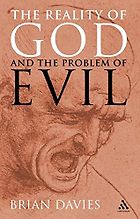
Your next book is The Reality of God and the Problem of Evil by Brian Davies. So far, we’ve been talking about arguments for the existence of God. But it seems that the problem of evil in its various forms is the most prominent argument against God’s existence. How compelling do you think it is?
I don’t think the problem of evil is a very compelling argument at all, when considered as an objection against God’s existence. Brian Davies would agree with that. That doesn’t mean, however, that evil is not mysterious or that the question of why God would allow evil is not mysterious. Those are very deep and mysterious questions. However, if the claim is that the existence of evil is somehow incompatible with God’s existence, so that it constitutes a refutation of God’s existence, I don’t think that’s a very strong argument at all. And neither would Davies.
What’s unique about Davies’ approach in his book?
He approaches the problem of evil in a way that’s informed by the understanding of God’s existence and nature that is represented by Aquinas. In this book Davies looks at the problem of evil through a Thomist lens. One of the things he wants to emphasise is just how different the approach of the classical theist tradition toward the problem of evil is from the sort of approach you see in a lot of contemporary philosophers of religion like Alvin Plantinga or John Hick or Richard Swinburne. This is where this distinction that I drew earlier, between classical theism on the one hand and theistic personalism on the other, plays a big role. The theistic personalist, as I mentioned earlier, is someone whose starting point when thinking about God is the thesis that God is like we are — a member of the general class or category ‘persons’ — and he’s just different from us in not having the limitations that human persons have.
If you approach the question of God’s nature that way then it’s very easy to start thinking about God as a kind of moral agent, just as we are. This is to think of him as someone who has certain moral duties, someone who exhibits certain moral virtues and so forth. And then the problem of evil starts to look like it’s a question of how God can be morally justified in allowing the evils that he allows. Questions arise such as: is God violating some duty by not eliminating evil? Is God somehow less than virtuous by not eliminating evil? This is the way that the problem of evil starts to look if you think of God as one person alongside others.
“On analysis, there is no strict inconsistency between God’s existence and the existence of evil. ”
What Davies emphasises in this book is that from the classical theist point of view — from the point of view of someone like Aquinas — this is simply the wrong way to approach the question. The conversation gets off on the wrong foot if we think of God as a kind of moral agent who, just as human beings do, has certain moral obligations and can intelligently be said to have or to lack certain moral virtues and so forth. As Davies emphasises, for a classical theist writer, God is not a moral agent. It doesn’t mean that we can’t attribute to God attributes such as goodness and love. Davies is keen to stress that he’s not denying that. It certainly doesn’t mean that we shouldn’t attribute to God certain personal attributes like intellect and will. Davies, just like Aquinas, would emphasise that we ought to attribute those things to God as well.
The point, though, is that it’s a mistake to think that this entails that God is a kind of moral agent. One of the reasons that it’s a mistake is that the sorts of things that we usually attribute to moral agents are not intelligibly attributed to God. For example, we think of a moral agent as being courageous or being cowardly. Someone can intelligibly be said to be courageous or cowardly only because he faces certain dangers. Courage is a matter of doing the right thing in the face of danger, so that we attribute courage to someone precisely when he does that.
But God is never in danger. God is outside time and space. God is immaterial, so he doesn’t have a body. There’s no such thing as God being wounded or in danger of getting a disease or in any other way capable of suffering any kind of harm. So it doesn’t make any sense to attribute to God a virtue like courage or, for that matter, to attribute to him a vice like cowardice. Concepts like these simply have no application to God. If we approach the problem of evil as a problem of how to justify God as a moral agent in the face of evil, we’re getting the conversation off on the wrong foot.
Leaving aside questions of moral agency, how does Davies understand the existence of moral values? Does he see moral values as ultimately grounded in God’s being?
For Davies and other Thomists, goodness is grounded in the natures of things. The right way to approach the question of goodness is to think of models like the way we would describe something as a good specimen of a kind of thing. We might say, for example, that a certain dog is a good specimen of its kind because it exhibits all the dog-like features — all the features that are typical of fully functioning healthy dogs. It has four legs, a tail, it barks, it scampers about and so forth. We would say that it is a good specimen of a dog in a way that a dog that was missing a leg because it got hit by a car, or is sickly and lies about lethargically, is not a good specimen of a dog – at least not if we’re trying to indicate to someone who does not know what a dog is what is characteristic of its kind.
Goodness and badness has to do with how well or badly something lives up to the paradigm case of the kind. In the case of a tree, say, a tree with healthy roots and healthy bark is a good specimen of a tree, whereas one with weak roots and its bark all ripped off is a bad specimen of a tree, because it doesn’t live up as well to the pattern or paradigm of what makes something a fully functional healthy tree. This analysis of goodness and badness goes back to ancient thinkers like Aristotle, and medieval thinkers like Augustine and Aquinas incorporated itinto their own thinking.
For that reason, for Aquinas, there’s a lot that we can know about morality even apart from religion. There’s a lot we can know about what makes for a good human life, where we can bracket off the question of God’s existence. If what’s good for a human being has to do with the nature of a human being — with what is conducive to fulfilling our nature, the ends and purposes that we have to realise in order to flourish as the kind of thing that a human being is — and human nature is what it is whether or not it was created by God, it follows that there is a lot about morality that we can know apart from the existence of God. I don’t want to say that according to Aquinas, every aspect of morality can be dealt with apart from the question of God’s existence,. That wouldn’t be correct. But at least a large part of morality can be determined by bracketing off questions about God’s existence and nature. In that way, moral goodness is not directly metaphysically grounded in God’s nature.
But indirectly it is, because Aquinas thinks that when God creates the world — when he makes human beings, for example — what he’s doing is making things according to the divine archetypes, the ideas or patterns that exist in the divine intellect. Here Aquinas is building on Augustine and earlier predecessors in the medieval tradition. Aquinas would take what Plato famously thinks exist in the realm of the Forms — the Form or pattern of being a human being, a triangle, a dog etc. — and hewould locate those, just as Augustine did, in the divine intellect. He thinks that when God creates, he is creating something in the world of concrete physical things that instantiates the archetype or pattern that pre-exists in the divine mind. In that way the natures of things ultimately derive from some idea in the divine intellect.
You can say that in that sense the nature of a thing — and thus what’s good or bad for it — derives from God. But its direct grounding is still in the thing itself. What’s good and bad for human beings is directly grounded in their own nature, rather than in the divine will for example. That’s the important point to emphasise. The reason it’s bad for us to murder or to steal is not because God has arbitrarily decided to decree that we shouldn’t steal. It’s rather because given the nature that we have, we cannot flourish if we murder and steal from one another. That would be true for Aquinas even if it turned out that God didn’t exist. It would still be bad for us to murder and steal because it’s contrary to what is required for our flourishing as the kind of things that we are.
You said that even if God did not exist, it would still be wrong for us to do certain things because they go against our fixed nature. But where would this fixed nature come from, if there were no divine blueprint that establishes the existence of these essences?
Aquinas certainly thinks that the existence of anything, even for an instant, depends on God keeping it in being. So, ultimately, we wouldn’t have the natures we have if God weren’t keeping us in existence. But that’s true of every feature in the world. Nothing would exist or operate the way it does if God wasn’t keeping it going. For Aquinas, there’s nothing special in that regard about our essence or teleology that requires God to keep them in existence. Again, it’s true of every aspect of the world.
If we’re saying that God is not a person and not a moral agent, what is it that distinguishes this view from a deist understanding of God? This is the view that God exists, sets up the world, but isn’t concerned with interacting or moved by our suffering.
One thing to emphasise is that while Davies does not think it’s correct to think of God as a kind of moral agent, nevertheless he certainly thinks that we can and ought to attribute to God attributes such as goodness and love. His point is simply that the way in which God can be said to be ‘all good’ or ‘all loving’ is at best misleadingly thought of on the model of someone living up to his moral obligations. It’s not a matter of exhibiting moral virtues like courage or compassion because, as I say, God cannot intelligibly be said to have the sort of features that call for virtues like courage. How then should we think of God’s goodness?
For Davies, as for Aquinas, the goodness of a thing has to do with how well or badly it actualises the potentials that are inherent in its nature. We say, for example, that a good tree is a good tree because it more fully actualises the potentials that are inherent in something by virtue of being a tree. A tree has the potential to sink roots into the ground and take in nutrients and water through them. To the extent that it does so, it’s a better tree than it would otherwise be. When we get to God, we are talking about something which is fully actual. There’s no unactualised potential in God whatsoever. And so, if goodness has to do with actualisation and badness with the failure to actualise a potential, then God, who is always fully actual, would have to be fully good. That would follow from this analysis of what it is to be good. That’s why we have to think of God as perfectly good, even if we’re not thinking of God as being a moral agent.
Support Five Books
Five Books interviews are expensive to produce. If you're enjoying this interview, please support us by donating a small amount.
In denying that God is a moral agent, Davies certainly doesn’t want to say that God has no interest in how things go for human beings or his creation in general. He certainly doesn’t want to say that God is not providential. He would affirm all of those things about God. God never does anything without some purpose, or without some good in view. In saying that God is not a moral agent, he’s simply trying to avoid anthropomorphising God and making God out to be too human-like. You might even say he’s concerned with not trivialising the nature of God’s goodness. The way Davies likes to put it is that it’s a mistake to think of the claim that God is all-good as being the claim that God is particularly well-behaved, as if God is a kind of a Boy Scout who has won all the merit badges. God’s goodness, for Davies, is greater than that. It’s higher than that, not less than that.
Another aspect of the question where Davies borrows from Aquinas, and from other medieval writers like Augustine, is the idea that God allows certain evils to exist because, and only because, he’s drawing out some greater good from them. There’s always a larger end in view that God has in mind even if we don’t. Even if we can’t see the full picture, God can. The idea is that the way divine providence works ensures that whatever evil God allows always plays a role in securing the greater good. There’s no arbitrariness or irrationality to it.
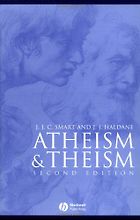
Your last book is Atheism and Theism.
This book is now in its second edition, having first appeared in the mid 1990s. Smart is one of the most important thinkers in analytic philosophy in the 20th century. He primarily wrote in metaphysics and the philosophy of science, as well as writing on ethics. John Haldane is an analytical Thomist. I think he even came up with the label ‘analytical Thomism’. He is trained in both the analytical tradition and the Thomist tradition and has been very concerned with bringing these two traditions into conversation. And that is certainly reflected in this exchange between Haldane and Smart in this book.
“Haldane tries to address the concerns that an analytic philosopher is likely to have with the kinds of arguments that a medieval thinker like Aquinas would give.”
Smart takes the atheist side of the debate and Haldane takes the theist side of the debate. Haldane’s approach is very much in the tradition of Thomas Aquinas, which is reflected in the kind of arguments that he gives in the book. But also, as with some of these other writers like Gavin Kerr and Brian Davies, he brings Thomism into conversation with contemporary analytic philosophy. He tries to address the concerns that an analytic philosopher is likely to have with the kinds of arguments that a medieval thinker like Aquinas would give. So, the book is unique among contemporary books on the subject of philosophy of religion precisely because Haldane is arguing from this more classical tradition – the tradition represented by Aristotle and Aquinas. And so, the arguments he presents are very different from the kind that you might see in a contemporary philosopher of religion like Alvin Plantinga or Richard Swinburne or William Lane Craig. So, someone who reads this book is not going to get the same old, same old. They’re going to find a very different approach than they might expect or that they’ve been used to from other literature in contemporary philosophy of religion.
Not necessarily from those advocated by Smart, but what do you think is the strongest argument against the existence of God?
I think the strongest argument against the existence of God would be an argument to the effect that we simply do not need to appeal to any divine first cause in order to explain the existence and nature of the world. That’s one of the two main arguments that Aquinas regards as the chief arguments for atheism in the Summa Theologiae, the other being the problem of evil. I think this is a stronger and more interesting challenge to theism than the problem of evil. It’s the claim that God is unnecessary, that he is a fifth wheel. It’s no surprise that I don’t think that argument actually works even for a minute. At the end of the day, I don’t think it’s a strong argument. But I would say that if someone is committed to atheism and wants to make atheism plausible, then that will be the way to go rather than an argument from evil.
And that would be an evidential argument from evil, rather than what’s called a logical argument from evil?
A logical argument from evil would be an attempt to show that the existence of evil is strictly logically incompatible with God’s existence. Now, I don’t think that sort of argument works and it’s generally accepted even by contemporary atheist philosophers that that sort of argument does not work. On analysis, there is no strict inconsistency between God’s existence and the existence of evil. There is at least in theory, at least in principle, no example of evil for which God might not have some reason to allow it. So, you’re not going to get a logical argument from evil off the ground.
Instead, you’d have to go for an evidential argument. This is the sort of argument offered by atheist philosophers like William Rowe. You’d have to show that even though, in theory, for any example of evil we come across, there might be some reason why an all-powerful and all-good God might allow it, nevertheless when we weight the probabilities there are some evils where it is unlikely or improbable that an all-good and all-powerful God would allow it. The existence of such evil gives us good grounds to doubt the existence of God or to deny God’s existence, even though it doesn’t count as a strict proof. That’s the kind of argument that an atheist would have to develop in order to get the problem of evil off the ground as an objection to theism.
The problem with that, though, is that if you do have an independent demonstration that God exists, if you’ve got something like a successful version of Aquinas’ Five Ways, then you already know independently that there is a first cause of the world who is infinite in power, all-good, and so on. So, you independently know that for any instance of evil that occurs, there must be some reason why God allows it, even if we don’t know what that reason is. Even Rowe would acknowledge that if you do have an independent argument for God’s existence, then an evidential argument from evil is not going to have any force at all. An evidential argument from evil will have force only if you’re starting from a position where both sides agree that there are no good positive arguments for God’s existence.
Get the weekly Five Books newsletter
So, for those sorts of reasons, I don’t think an argument from evil is very powerful. If you’re going to defend atheism, you’re better advised to go the route of showing that God is simply unnecessary – that we can explain everything without any appeal to a divine cause. I don’t think that approach works either. One of the problems is this. If you’re going to argue that the existence of God is simply unnecessary, you’re ultimately going to have to deny the principle of sufficient reason, where the principle of sufficient reason is the thesis that for anything that exists and for anything that occurs, there must be a reason sufficient to account for why it exists or occurred. There are different ways to formulate the principle but that’s one way of doing so. In my view, I think that if you follow out the implications of the principle of sufficient reason, you’re going to be led to a first cause of things that exists of necessity; you’re going to be led to a necessary being. And when you unpack the implications of the idea of a necessary being, you’re going to find that it has all the divine attributes. In other words, if you admit the principle of sufficient reason, you’re going to be led unavoidably to theism.
“An evidential argument from evil will have force only if you’re starting from a position where both sides agree that there are no good positive arguments for God’s existence.”
So, if you’re going to avoid theism, you’re ultimately going to have to deny that the world is intelligible and that we can ultimately make sense of it. You’re going to have to deny the principle of sufficient reason. But the minute you do that, you ultimately end up unravelling the very project of giving rational explanations, whether in philosophy or in science. Science and philosophy come tumbling down along with natural theology. There’s really no way for the atheist to have his cake and eat it too. We either have a world that really is intelligible, that we can make sense of, in which case we’re going to have to commit ourselves to the principle of sufficient reason and be led unavoidably to theism. Or, if we’re going to avoid theism, we are going to have to deny the principle of sufficient reason. But there’s not going to be any way to do that coherently without ultimately denying the possibility of philosophical or scientific explanation in general. That’s why I think this other approach to try to justify atheism is not going to work
Why do you say that this leads inevitably to theism rather than, say, deism? Couldn’t it be that the universe is set up and then left completely alone?
The arguments for God’s existence that I think are the most powerful ones lead you to the existence of a God who not only got the ball rolling thirteen billion years ago with the Big Bang, but who conserves the world in being from moment to moment. This is actually the standard view in classical theism, whether we’re talking about Aristotle or Plotinus or Maimonides or Aquinas or Anselm. The idea is that the fundamental way in which God is the cause of the world is not by virtue of having performed some single act in the past, but rather has to do with keeping the world going from moment to moment. If you can get to that, you have already ruled out deism. A deist conception of God is the idea of a cause who simply got the ball rolling but has disappeared and, for all practical purposes, may not even exist anymore. This is why deism, historically, was a kind of stepping stone from theism to atheism. If God need not be around to keep the world going, then maybe he was never around in the first place. But the kind of arguments that we see in Aquinas are arguments precisely for a God who is active at every moment at which the world exists.
Five Books aims to keep its book recommendations and interviews up to date. If you are the interviewee and would like to update your choice of books (or even just what you say about them) please email us at [email protected]
Edward Feser is an associate professor of philosophy at Pasadena City College. Called by National Review “one of the best contemporary writers on philosophy,” Feser is the author of The Last Superstition: A Refutation of the New Atheism, Aquinas, Scholastic Metaphysics: A Contemporary Introduction, Neo-Scholastic Essays, and Five Proofs of the Existence of God, as well as the editor of The Cambridge Companion to Hayek and Aristotle on Method and Metaphysics.
Edward Feser is an associate professor of philosophy at Pasadena City College. Called by National Review “one of the best contemporary writers on philosophy,” Feser is the author of The Last Superstition: A Refutation of the New Atheism, Aquinas, Scholastic Metaphysics: A Contemporary Introduction, Neo-Scholastic Essays, and Five Proofs of the Existence of God, as well as the editor of The Cambridge Companion to Hayek and Aristotle on Method and Metaphysics.