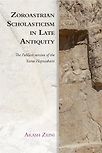
Before we get to your book recommendations, can you give a very brief introduction to Zoroastrianism and its principles?
Zoroastrianism is an ancient Iranian religion which is often — and rightly — described as one of the world’s oldest living religions. With a history of more than 3500 years, it is traditionally attributed to Zarathushtra, whose name in Greek, Zōroástrēs, lies behind the term ‘Zoroastrianism’.
It introduced ideas that have shaped religious thought far beyond its own community: the cosmic struggle between good and evil, the importance of individual moral choice, and the hope of a final renewal of the world at the end of time.
Once associated with three Persian empires, Zoroastrianism is today practised by small communities in Iran, India, and across the diaspora. Its ritual life centres on fire temples with ever-burning flames, and reverence for the natural elements plays a role as well. Zoroastrians have often been described as ‘fire worshippers’, though this characterisation is misleading. The ethical triad of ‘good thoughts, good words and good deeds’ lies at the heart of the religion and remains a widely cited principle among Iranians today.
So we are responsible for the consequences of the choices that we make as individuals, for choosing the right words and actions. What is our collective responsibility for influencing the outcome of the cosmic struggle between good and evil that you mentioned?
That’s a wonderful question, and very important in Zoroastrianism, even today. The idea is that the creation in its original state was immaterial, but Ohrmazd (or Ahura Mazdā), the principal deity, already knew that the evil force would attack. Ohrmazd decided to create humans in order to further his good work in the material world, which is striving towards a renewal or resurrection, if you like, at the end of time. The world, according to Middle Persian sources, has a finite time of twelve thousand years. We live in a period of mixture, a time when good and evil are mixed.
There are wonderful narratives about this. For instance, Ohrmazd created the fruits for us to enjoy, but the evil forces created peels to make it more difficult. Or, fire was pure in its original creation, but the evil forces added smoke to it. In this time of mixture, humans are supposed to make a choice about doing good works, to try to oppose the evil forces within the creation. That’s where conscious choice comes in, to help further Ohrmazd’s good works towards the renewal at the end of time. Even if you are born as a Zoroastrian, you have to accept the religion at some point, which, according to the Iranian tradition, is at the age of fifteen.
A coming of age when you take more responsibility for your words and deeds?
Exactly. Until the age of fifteen, parents are responsible for the deeds of their children. By the age of fifteen, you accept the religion and are initiated into it. You become an adult, and you’re responsible for your own deeds and thoughts.
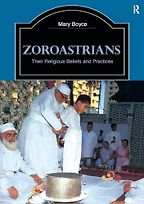
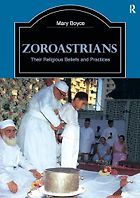
Your first book recommendation is Zoroastrians: Their Religious Beliefs and Practices by Mary Boyce. The Royal Asiatic Society has named its annual prize for the study of religion after her. Please tell me about this book, which was first published in 1979.
I picked this book because it is one of the first books to look at Zoroastrianism as a religion within its historical settings and for a wider public. It was published in a series that was intended for a general audience and students. It had to cover these two bases, and she does that very well.
Mary Boyce was Professor of Iranian Studies at the School of Oriental and African Studies in London. She became very influential through her teaching and writing, but also because of the students she educated. Nowadays, the field has moved away from many of her views and the language that she uses, but she remains a rare example of a scholar of religion — rather than philology or linguistics — looking at very difficult sources and giving her audience a broader overview of the religion.
She starts with the pre-Zoroastrian times and moves to the Achaemenids, to the Sasanians, all the way to the contemporary lived religion in the present day. It is chronologically arranged and looks at the historical relevance of Zoroastrianism for the various empires before the coming of Islam to Iran. It remains one of the only books that does this. I love the preface, where she says Zoroastrianism is the most difficult of living faiths to study. She then goes on to highlight why, which still holds true. We have a problem with the transmission of Zoroastrian sources, and she tackles all that, but is able to move away from source study to a comprehensive study of the religion within 3500 years of history.
Boyce writes that Zoroastrianism has probably had more influence on mankind, directly and indirectly, than any other single faith. Do you agree?
She was very fond of Zoroastrianism and in its essence the statement still holds true. One remarkable thing about Zoroastrianism is that it is today such a small faith, unknown to many people, yet historically a very significant religion and intrinsically connected to Iranian identity, at least in historical terms.
Presumably she was talking about the adoption of Zoroastrian doctrines or practices in the Abrahamic religions and even Buddhism?
Some of this may be a bit contentious, but people have argued that the idea, for instance, in Christianity of resurrection may have been influenced by Zoroastrianism. The concept of paradise and an afterlife in other religions seem to have been influenced very heavily by Zoroastrianism as well. The idea of a cosmic struggle and ethical choice for the individual, more or less prevalent in many different religions, again seems to have come from this religion, or at least this is one of the earliest attestations we have of such ideas.
There is also a very interesting view of the animal world as well as the natural environment. Some modern Zoroastrians claim environmentalism as an important concept in Zoroastrianism. The care and protection of the natural elements against pollution by dead matter is so strong that it has influenced, for instance, the way burial is handled. Traditionally, Zoroastrianism favours sky burial, avoiding traditional burial in a cemetery, although the latter has now been accepted by some communities. Sky burial is practised in other cultures as well, but it is difficult to understand the processes of contact, if any at all. The Babylonian Talmud was written under the Sasanian Empire in close contact with Zoroastrians, and we see Zoroastrian kings mentioned in Jewish writings of the time. This shows how productive the exchange between these various religions within the Middle East would have been at the time.
Boyce also mentions Zarathushtra’s break with aristocratic and priestly tradition. Can you talk a bit about his role as a reformer? For example, if he brought in the idea of standing judgement at the end of life for our deeds, regardless of class or status, that must have been radical.
There is a whole line of contemporary scholarship that would like to believe that Zarathushtra actually didn’t exist as a figure, but this is a slightly separate debate. The idea of Zarathushtra as a reformer goes back to shifts and departures from the Indian tradition. The kernel of the idea that your individual deeds determine where you end up after you die — in a hell or a paradise — is already in the oldest layers of texts, but a developed picture emerges much later. There is a bridge that you have to cross. That bridge is wide if you have had good deeds, so you walk over it easily. But if your bad deeds dominate, it becomes very narrow, sharp like a sword, and you fall into an abyss. That’s the imagery for what happens, and that’s irrespective of your class or social standing.
In the Gathas, the oldest layers of the Avesta (the sacred corpus), the figure of Zarathushtra complains about poor support by patrons and enmity. It seems he only finds royal support after moving to other planes.
You wanted to mention another book by Mary Boyce as well?
She was a prolific scholar and published many influential books and articles. There is one book that stands out: A Persian Stronghold of Zoroastrianism, from 1977. This would have been my first choice for the five books, had it been more readily available. It is based on six lectures she delivered at the University of Oxford in 1975, which go back to fieldwork she carried out in Iran from 1963 to 1964. The book is entirely devoted to the lived religion at the time and the rites and beliefs of the Zoroastrians in Sharifabad. Many of these have been abandoned since, so it’s a very important record of the lived aspect of this religion. We are preoccupied with the historical sources and Zarathushtra himself and his message; the lived religion is often not considered. This book was a milestone in bringing that to the attention of the scholarly world, and it’s a really big pity that it is not easily available.
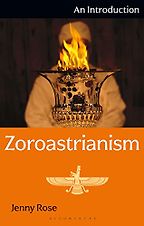
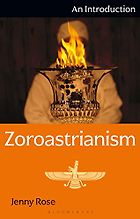
Let’s move on to Zoroastrianism: An Introduction by Jenny Rose. Published in 2011, it looks like a very accessible overview. Can you introduce it, please?
Rose offers an updated, thoughtful, accessible and yet nuanced engagement with Zoroastrianism. This book looks at the theological and religious aspects and gives a wide and comprehensive overview from the beginning to contemporary lived religion. Since Mary Boyce, there has been a shift within the study of Zoroastrianism away from theological aspects, towards an understanding of it as a ritualistic religion. No religion is just theology, just philosophical thought or just ritual. Most of the time you find a mix, but recent scholarship often neglects the theological and philosophical thought within Zoroastrianism, mostly because of the problems of textual transmission and scarcity. We need to find a balance in discussions of those aspects of the religion, and I think Jenny Rose does that very well. This is, in my view, the best introduction to Zoroastrianism that we currently have.
She discusses Zoroastrianism’s constant redefinition. Can you talk a bit about that?
Any religion that is part of academic study becomes an object through the gaze of the scholar. That’s particularly a problem within the study of Zoroastrianism. Because the living community is small, there is not enough intellectual engagement where scholars could resort to living priests who have a significant overview and contribution to make. The religion has been very often defined in terms of continuity; that’s a preoccupation of Western scholarship on Zoroastrianism, and I think we have often missed nuances of the religion redefining itself again and again. It is my view that Zoroastrianism, as we know it, is a product of the Sasanian era (224-651 CE). Before that, I would be much more comfortable to talk about an Iranian religion that then turns into Zoroastrianism by imperial engagement under the Sasanians. And then Zoroastrianism gets a renewal after the fall of the Sasanians. A number of Middle Persian texts are written in the early Islamic period; that, again, is a redefinition of Zoroastrianism.
Zoroastrianism preserves many ideas, but also undergoes various processes of renewal and redefinition. Jenny Rose points out the vibrancy of the religion. It is going through a renewal again, as we speak. With the ongoing conflict in Iran, many people (mostly non-Zoroastrians) bring Zoroastrianism as an intrinsic part of Iranian identity into the discussion. Rose also discusses the emergence of variations of Zoroastrianism in Central Asia. This is something that many scholars of Zoroastrianism today don’t pay attention to, but Jenny Rose does this very well, adding nuances to the study of Zoroastrianism as a living religion.
Is the biggest community of Zoroastrians today in Mumbai?
There is a small number of Zoroastrians in Iran, and a larger community in India. In the diaspora, we find members of both communities. They oppose and influence each other; there is a constant negotiation going on. One of the contentious debates is about intermarriage and conversion. With the numbers of followers dwindling, particularly in the traditional homelands of Zoroastrianism, this is an urgent debate for the community in the diaspora. A number of responses exist, but not a community-wide consensus.
It is a complex question. Traditionally, only those born to Zoroastrian parents can accept the religion. As a result, some would exclude children from women who marry outside of the religion, but not if a man marries out. Recently, I have also come across ethno-religious sentiments that would allow ethnic Iranians to accept the religion. But this is not a mainstream view. These questions and discussions mostly reflect the anxieties and concerns of the communities.
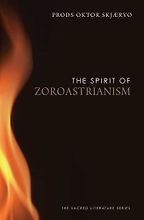
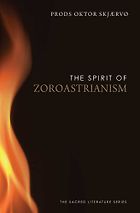
Two of the books we’re discussing are translations of the Zoroastrian scriptures that you mentioned briefly earlier, known collectively as the Avesta. Both have very informative introductions. Let’s start with The Spirit of Zoroastrianism by Prods Skjærvø, published in 2011. It is organised thematically, with texts about creation, eschatology, body and soul, ethics, and so on.
The Spirit of Zoroastrianism is one of the rare gems in the study of Zoroastrianism, because Skjærvø is a brilliant philologist and linguist. He has dominated the field and the discourse through his scholarship and teaching, but this is more or less the only work he has published as a book. In the informative introduction, he lays out his views of Zoroastrianism and how the ritual serves a larger theological view. Then he illustrates his points and views by providing the reader with a selection from within the Zoroastrian corpus. The importance of this book lies in the fact that it is written for studentship as well as the general audience, which is rare in Zoroastrianism.
A nice feature of this book is that it doesn’t restrict itself to one corpus. It also cites from the Achaemenid inscriptions, which are royal and not religious. This gives a fuller view of cultural and political aspects of Zoroastrianism. Skjærvø also offers translations of Young Avestan as well as Old Avestan texts. The Old Avestan texts are the Gathas, the Yasna Haptaŋhāiti and some manthras; among these the Gathas are traditionally ascribed to Zarathushtra. They are comparable to the language of the Rigveda. Young Avestan is used in the corpus that emerges around the Gathas, with religious laws, songs of praise, ritual texts and commentaries. Skjærvø also gives many translations from Middle Persian literature. It’s a selection that gives you a good grounding in understanding what the Zoroastrian scripture across time looks like. The translation of the Avestan texts is very literal and tries to preserve in English the flavour of the original. I like this approach and think it’s successful.
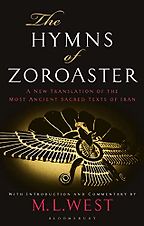
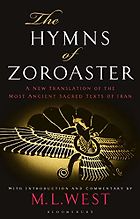
Next up is The Hymns of Zoroaster: A New Translation of the Most Ancient Sacred Texts of Iran by Martin Litchfield West, published in 2010. How does it differ from Skjærvø’s translation?
Skjærvø was instrumental in propagating the idea, from Jean Kellens, that Zarathushtra was not a historical figure. The way I understand it, it’s not to question the historicity of Zarathushtra, but to highlight that Zarathushtra is not a historical figure within the corpus as we have it. Martin West, coming to the field much later and as a complete outsider, takes the exact opposite view, a very traditional view. West was an influential classicist who significantly contributed to discussions surrounding Homer and his compositions. He wrote a book called Early Greek Philosophy and the Orient, looking at pre-Socratic philosophy and its links to Zoroastrianism, or the Orient more generally. When you look at that introduction, West says that he’s coming to this book as someone who doesn’t have Middle Persian and Avestan. That was in 1971. But he went on to acquire these languages and published this book, providing a traditional translation of the Gathas. It is much more grounded in the older scholarship, in the idea that there is an individual talking about his own hardship as a messenger, and underlines the idea that these texts are much closer to pre-Socratic Greek philosophy than just purely ritual texts.
Although West is not very well accepted by Iranists, I think this is a balancing perspective, and it provides diversity within the discussion. West’s translations are also much closer to the Zoroastrian community’s understanding of the Gathas, the traditional understanding of the texts and what they mean as compositions by Zarathushtra. The other important part is it’s a very accessible and readable English translation, and the introduction lays out his views very well, so everyone can engage with these texts.
In the introduction, he talks about the closeness of the language of the Gathas to the Rigveda, which you touched on earlier, and the common Indo-Iranian culture of the second millennium BCE. Do you want to talk a bit about links between Zoroastrianism and Hinduism, or their common ancestor?
The language of the Gathas is remarkably close to the Rigveda’s, sharing not just vocabulary but also sentiments. But they also disagree in various points, most notably on deities and demons. Ultimately, both the parallels and the differences point to a shared heritage rooted in the Indo-Iranian groups; descendants of an unattested, though linguistically reconstructed, Indo-European ancestor. At some point, the Indo-Iranians separated; one group became Indian, the other Iranian. The Iranian side is attested through the Gathas, the compositions of Zarathushtra, and the Indian side through the Rigveda, which became a foundational text for the later Hinduism. Zoroastrianism and Hinduism are fundamentally different as they develop. Hinduism becomes a religion with strong ascetic tendencies, whereas Zoroastrianism moves away from asceticism towards a positive and affirming view of the material and tangible creation.
Zoroastrianism develops in a different direction and that has to do with its cosmology and the idea of creation. Since the material world is the creation of Ohrmazd, it is important to protect it, but also to enjoy its existence. That enjoyment is defined by practising the right measure, or the golden middle. Joy in this material world is connected with good thoughts and viewed as good. That’s why several Middle Persian texts say that when Zarathushtra was born, he was laughing instead of crying.
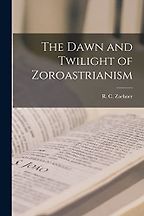
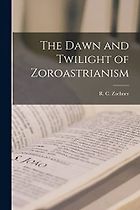
We have come to your final book choice, The Dawn and Twilight of Zoroastrianism by Robert Charles Zaehner. Published in 1961, it is the oldest of your recommendations. Can you introduce it, please?
Robert Charles Zaehner, a British scholar of the 1950s, was an intelligence officer for the British forces stationed in Iran. He contributed to the coup d’etat against the prime minister of the time, Mohammad Mosaddegh, which led to the overthrow of his government. It is perhaps a little bit of a provocation to include Zaehner’s book because of his role as an intelligence officer, but he did important work on Zoroastrianism, and I think any list of books would be incomplete without his work. He was a brilliant philologist and, to some extent, his work marked the beginning of the newer scholarship on Zoroastrianism.
This book is written for a general audience and introduces the religion through very interesting categories. It is divided in two sections, the dawn and the twilight. The dawn is the prehistory of Zoroastrianism, and the twilight is up to the coming of Islam. It deals very well with the Sasanian redefinition of Zoroastrianism as a systematised religion. Zaehner published first a book on Zurvan, one of the deities of Zoroastrianism. He thought Zurvanism was the dominant Sasanian version of Zoroastrianism and elevates it to a heresy, so there is some enthusiastic overreach there. Aspects of both books are outdated, but they have everything that you need to discuss Zoroastrianism. His reach, synthesis and command of the sources are impressive.
For its small size, the study of Zoroastrianism is an incredibly productive and vibrant field, but the articles are scholarly and the books, which are often brilliant and up to date, are not meant for a wider audience. Zaehner’s books really belong in this list, because they show how well one can do public-facing scholarship.
Earlier, you mentioned that Zoroastrianism is a feature of Iranian identity. Can you elaborate a bit on that?
You will find in Iran many people who discuss good deeds, good thoughts and good words. This triad remains a strongly Iranian value often understood to be Zoroastrian. You will find this creed in many homes, and many shops display something like this, without the owners being Zoroastrians. Ideas of cleanliness and pollution, a veneration and adoration of fire, and Iranian annual celebrations such as Nowruz, the new year, and Yalda, the winter equinox, blur the divide between a modern Islamic and Zoroastrian identity. Many of these cultural assets remain within the Iranian consciousness as originally Zoroastrian. With the advent of the Islamic revolution of 1979, many Iranians, without being engaged in a scholarly discourse, started defining Zoroastrianism as part of their identity, especially Iranians outside of Iran. The point is not that they converted. They discovered Zoroastrianism as an integral part of their identity. Some find these tendencies reactionary, but I find them less and less so.
Would you mind talking a bit about what Zoroastrianism means for you personally?
My own relationship with and understanding of the religion has gone through phases. My initial interest was mostly intellectual. I was fascinated by the shared heritage of the Indo-Iranian culture, and mystified by the many puzzles of Zoroastrianism’s transmission and its role within the history of religions. As time has passed, the engagement with Zoroastrianism has become more and more a journey and an engagement with my own heritage. I also seek to distance myself from Western academic approaches to the religion which, although often very erudite in linguistic knowledge, can yet remain incredibly simplistic; for instance, reducing the religion to a purely ritualistic system lacking any deeper discourse. For lack of a better word, I would call it Orientalist. I also seek, and this is a recent tendency, to reclaim Zoroastrianism for us Iranians.
With the war on Iran, I have discovered that cultural Zoroastrianism can be a spiritual guide for the tormented Iranian soul. This is not a rejection of any other religion, but an embrace of cultural values of light and hope. As the so-called Judeo-Christian and Islamic worlds are guided by politicians towards a destructive collision, I find increasing comfort in the space that Zoroastrianism offers me. I see no reason why we should not discover Zoroastrian messages of hope, friendship and love in times of utter darkness — and these are bleak times for all Iranians, no matter if they are Jewish, Zoroastrian, Muslim, or Christian — we all have a difficult time dealing with what is happening. I am not advocating for conversion or acceptance of the religion. But Zoroastrianism is a cultural asset that belongs to us Iranians, and we have reason to be proud of it. That is a new aspect that I am discovering, as I grapple with my own agency within a divided world, not as a nationalist or religious leader, but as a reader with hermeneutic agency.
Is there anything that you would like to add in conclusion?
It is notoriously difficult to present the Zoroastrian tradition to a general audience without oversimplifying the complexities surrounding the transmission of the faith. The difficulty of interpreting Zoroastrian canonical texts has led to a disciplinary dominance of philology. My recommendations here focus on engagement with the wider interested public, accessible introductions to Zoroastrianism as a religion and to its historical development and relevance.
I am grateful to Five Books for the opportunity to discuss these books. To round off the discussion, it is perhaps worth mentioning that I was asked to introduce five books in English that are aimed at a wider public and are easily accessible. Otherwise, the list could have been extended to include hundreds of titles in various languages.
Five Books aims to keep its book recommendations and interviews up to date. If you are the interviewee and would like to update your choice of books (or even just what you say about them) please email us at [email protected]
Five Books interviews are expensive to produce. If you've enjoyed this interview, please support us by donating a small amount.